
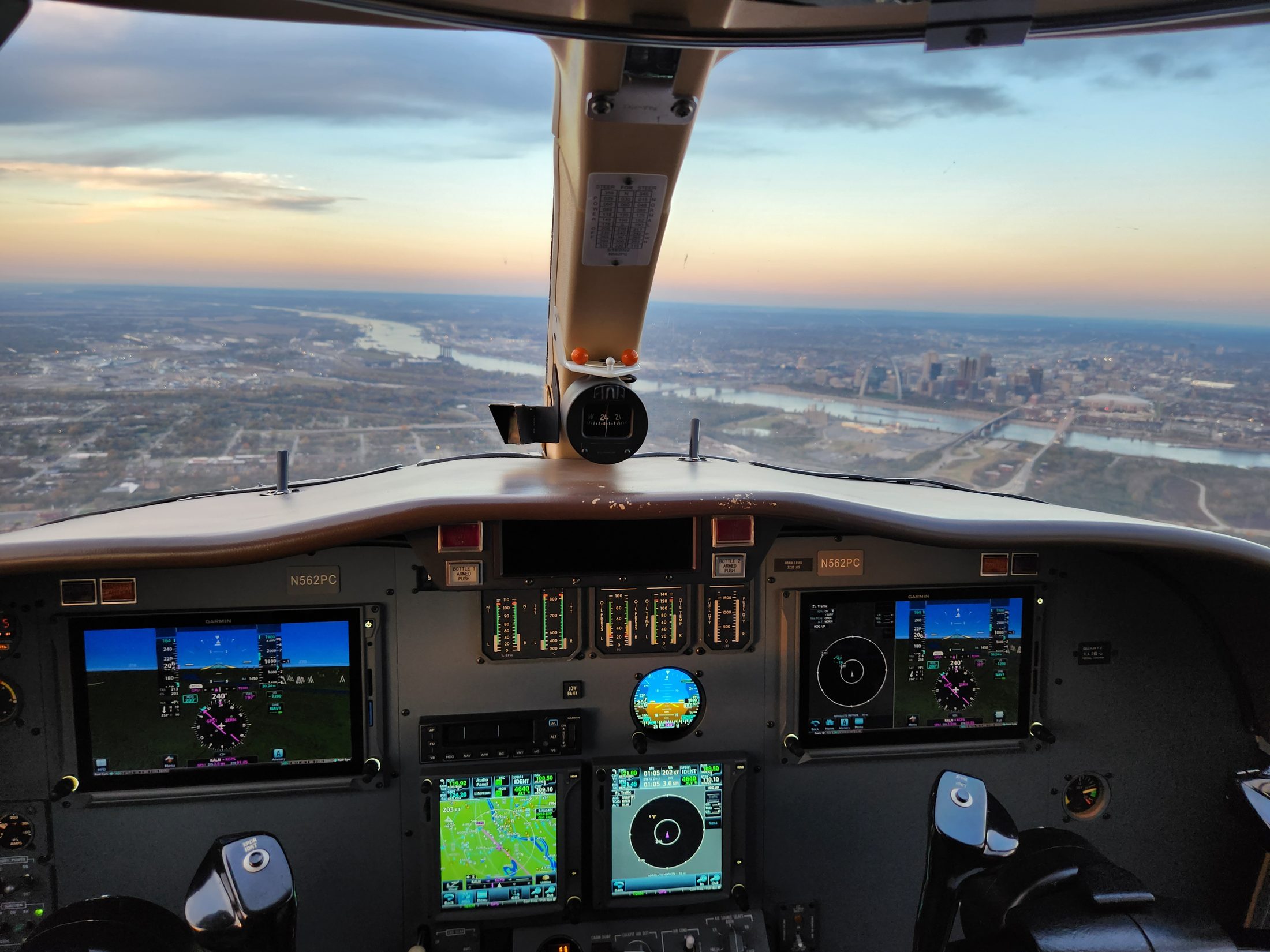
Considering private jet charter in St. Louis?
Charter can be an excellent way to fly privately without owning an aircraft. Gateway Jets is not a charter operator — we manage privately owned aircraft in the St. Louis region. Because we regularly review charter quotes for owners and occasionally purchase charter lift when it makes sense, we also see where charter works well and where frequent use begins to make aircraft ownership worth a closer look.
Hourly ranges are broad 2026 planning figures, not Gateway Jets charter rates. Actual pricing varies by operator, aircraft, dates, routing, and availability. Quotes may also include repositioning, minimum daily charges, crew overnights, landing and handling fees, de-icing, federal excise tax, domestic-segment taxes, and other trip-specific expenses.
Charter is priced by the trip, not just the flight hour.
The advertised hourly rate is useful for comparison, but it rarely tells the whole story. An on-demand charter quote reflects the aircraft, crew, positioning, schedule, and operating requirements needed to complete your specific trip.
A recent 2026 quote we reviewed for a CJ2-class round trip from Spirit of St. Louis Airport (KSUS) to Naples, Florida (KAPF) — three days, with roughly five and a half hours of flight time — was approximately $40,000.
That works out to an effective rate near the top of the midsize range, because positioning, daily minimums, crew, taxes, and fees are all inside that number. The advertised base rate for the same aircraft would look considerably lower. The aircraft and crew are committed for the length of the trip, not only for the hours flown.
Several factors can affect the final price:
- Aircraft positioning. The aircraft may need to fly into St. Louis before your trip begins or reposition after it ends.
- Daily minimums. Operators may require a minimum number of billable hours per day.
- Multi-day trips. Depending on the itinerary, the aircraft and crew may remain with you or reposition between trips.
- Peak demand. Holidays, major events, and other high-demand periods can affect both pricing and availability.
- Trip expenses. Taxes, landing and handling fees, crew expenses, catering, de-icing, and other charges may apply.
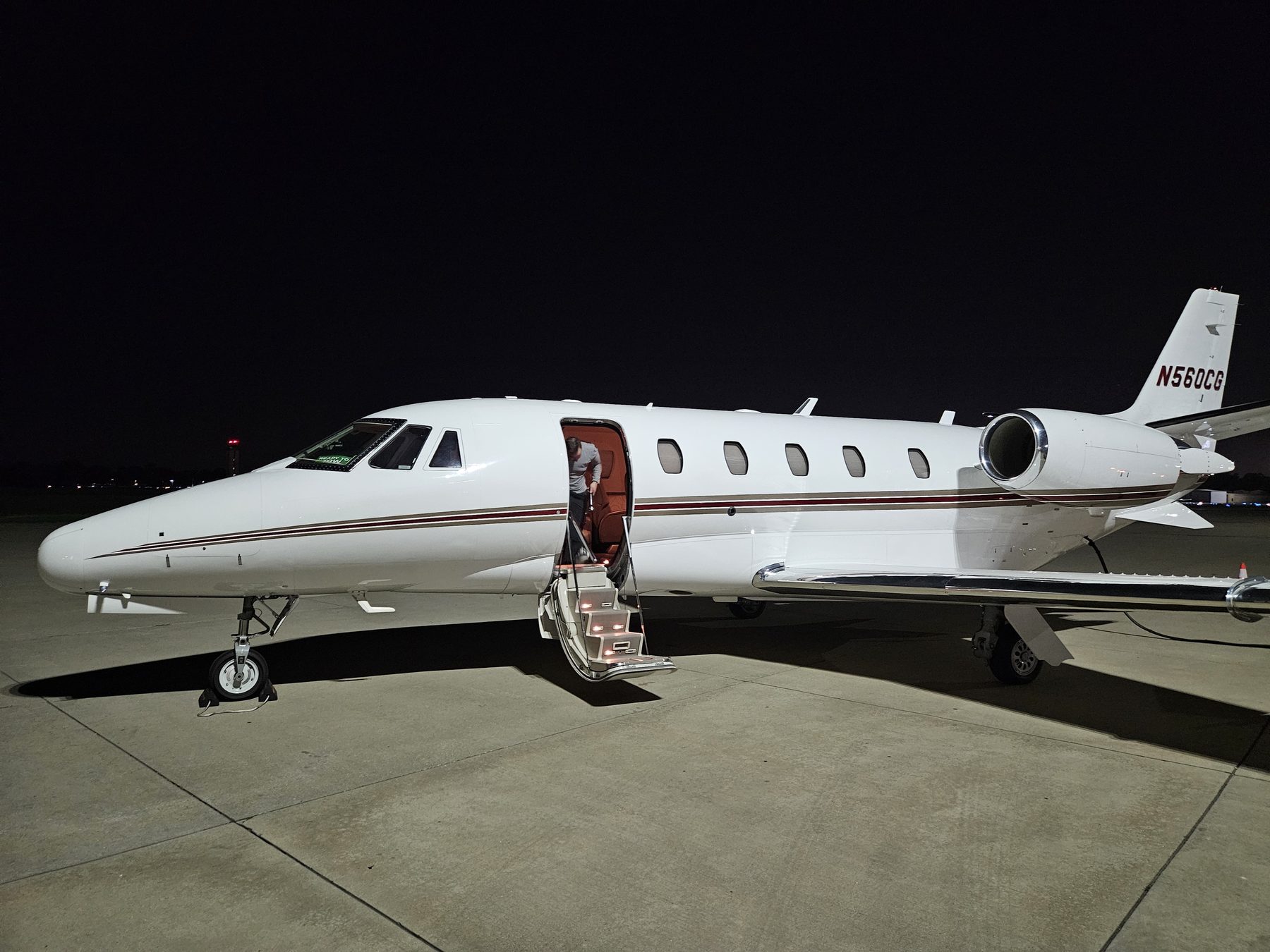
Where private aircraft operate in St. Louis.
St. Louis Downtown Airport
Located just across the Mississippi River from the Gateway Arch, KCPS is one of the closest business-aviation airports to downtown St. Louis and home to Gateway Jets' corporate hangar.
Spirit of St. Louis Airport
Located in Chesterfield, Spirit of St. Louis Airport is convenient to West St. Louis County and many of the region's aircraft owners. Gateway Jets also operates at KSUS and supports aircraft based there.
St. Louis Lambert International Airport
Lambert supports private aviation through its FBO facilities and can make sense for certain missions or airline connections. Many local private-aircraft users prefer KCPS or KSUS for their convenience and business-aviation focus.
Charter, jet card, fractional, or ownership?
There is no single right answer. Each approach solves a different problem.
Maximum flexibility, no long-term commitment
Charter works particularly well for occasional trips, changing aircraft needs, and travelers who do not want the financial or operational responsibilities of ownership — you pay for the trips you take and walk away when the trip is over. The tradeoff is variability in aircraft, crews, pricing, and availability from one trip to the next.
Simplified access with program rules
Jet cards can make private flying more predictable by offering defined aircraft categories, pricing structures, and availability commitments. They reduce the friction of shopping individual trips, but minimums, peak-day provisions, service areas, rate changes, and other program terms still matter.
Fleet access with a larger commitment
Fractional programs provide professionally managed access to a national fleet, typically through an aircraft share or lease combined with monthly management fees and occupied-hour charges. Availability and fleet redundancy are strong, but the aircraft is not exclusively yours and the economics can become significant at higher utilization.
The highest level of control and consistency
Ownership means one aircraft selected around your mission, operated to your standards, with familiar crews and a known maintenance history — along with capital, fixed expenses, maintenance exposure, and responsibility for operating the aircraft properly. For the right mission and utilization, those costs can compare very favorably with repeatedly purchasing private lift from someone else.
Charter has an important place in private aviation.
For a handful of trips each year, frequent one-way travel, or missions that regularly require very different aircraft, charter can be the simplest and most economical answer.
There is no aircraft to purchase, no hangar or insurance expense, no maintenance responsibility, and no permanent crew structure to support. A capable charter operator or broker provides real value in those situations.
The equation begins to change when travel becomes predictable: the same passengers, similar destinations, recurring round trips, multi-day stays, peak travel dates, and a consistent home base.
At that point, you are no longer simply deciding how to buy a flight. You are deciding whether continuing to buy individual trips is the best way to meet an ongoing transportation need.
The mission matters more than an arbitrary annual-hour rule.
Private aviation has long repeated the idea that aircraft ownership begins to make sense around 100 annual flight hours. We think that rule is too broad.
In the comparisons we have run for repeat light-jet and Citation missions, ownership can deserve serious consideration around 35–50 annual flight hours — particularly when those hours consist of recurring round trips from the same home base.
The break-even point can move significantly depending on:
- Aircraft acquisition price and financing
- Depreciation and expected ownership period
- Crew structure
- Maintenance condition and program coverage
- Hangar and insurance costs
- Annual utilization
- Charter repositioning and minimum charges
- Trip length and frequency
- Peak-period travel
- Expected resale value
That is why we prefer to compare actual trips instead of relying on a generic hourly threshold.
Our CJ2 ownership brief puts the comparison on paper: annual cost from 25 to 200 flight hours against charter, jet cards, and fractional, built from an actual managed-CJ2 operating budget — plus the real St. Louis–Naples trip costed both ways.
If you charter regularly, put ownership beside the real numbers.
Bring us your recent charter, jet-card, or fractional quotes and the trips you actually fly. We can build a realistic ownership budget around an aircraft suited to those missions and compare the two — acquisition, fixed expenses, crew, fuel, maintenance, programs, and expected resale included.
Sometimes charter will remain the better answer. For the right traveler, though, the comparison can reveal that owning the aircraft provides not only greater control and consistency, but a stronger financial case than expected.